IT Solutions
3 key factors in the digital transition of SMEs
March 24, 2026 · 4 min read

According to a 2017 [Québec International](https://www.irosoft.com/statistiques-sur-la-transformation-numerique/) survey, 79% of business leaders believe that digital technology will be a major challenge over the next five years.
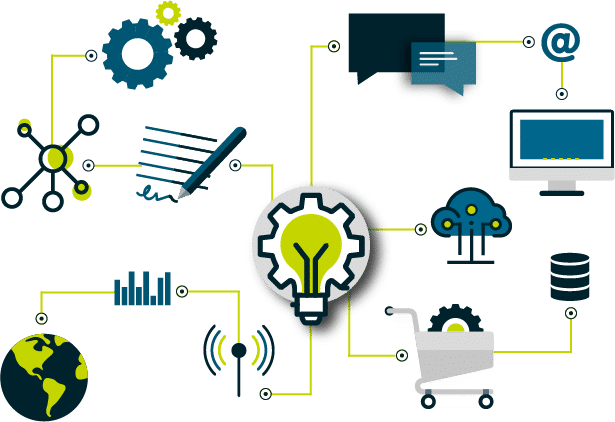
Indeed, in 2019, the digital transformation of SMEs represents a crucial challenge for growth, productivity and rapid profit generation. It goes beyond simply adding IT gadgets: it is a reshaping of the [company’s culture](https://www.bdc.ca/fr/articles-outils/technologie/investir-technologie/pages/comment-mener-transformation-numerique-entreprise.aspx) that makes it possible to meet customer needs and maintain a competitive technological edge. Here are three crucial [elements](https://conseils.telus.com/infonuagique/quest-transformation-numerique_1/) that will help SMEs successfully make the digital shift.
The 3 factors
Security
New technologies implemented within an SME must be reliable at all times. Optimal security is therefore arguably the most important element of a company’s digital transformation. Guided by their customers’ requirements, organizations may, for example, move to cloud services or outsource their IT services.
In fact, a 2014 INSEE study found that the larger a company is, the more it uses cloud solutions. This gives companies mobile access to their data while reducing the risks associated with local storage. Local storage has several drawbacks, such as backups centralized on the hardware itself (servers, hard drives, etc.), which increases the damage during outages, or limited storage space.
Along the same lines, outsourcing gives you access to a team dedicated full-time to planning for and managing potential malicious attacks, allowing the company to focus on its key business processes.
Data analysis
According to Irosoft, the amount of data generated and exchanged worldwide was multiplied by seven in five years. However, not every company is able to put that data to good use to grow its business opportunities.
Big Data News explains that 20 to 30% of companies’ operating costs stem from poor data management. This is one of the reasons why data analysis is the foundation of the digital transition.
This approach involves identifying difficulties, reviewing the actions already taken in each area of activity, and determining trends in the industry and among competitors. It then serves as a springboard for drafting an action plan to optimize the company’s technology solutions. This plan should focus on innovation and on improving quality within the SME.
Mobility
Mobile technology solutions are just as essential to the digital transition of SMEs: they make communication easier between internal and external collaborators, as well as between the company and its customers.
Enterprise mobility management rests on three pillars: mobile device management, mobile applications and, finally, mobile data. Employees can work from anywhere and access their work files from their mobile devices (phones, tablets, etc.), which broadens access to data.
Your employees will also enjoy more freedom and be able to work from anywhere. These tools also give you more ways to evaluate and quantify performance across the organization.
How to carry out a successful digital transformation
Les Affaires recently published a list of the steps to follow to carry out a digital transition properly:
- Identify the business processes you want to improve by keeping an eye on developments in your field of activity.
- Collect, analyze and manage your data in an organized way.
- Draw up a plan for your “digital vision” by listing the technology solutions that could benefit your SME.
- Strengthen the protection of your computer data.
- Build a team that shares this “digital vision.”
- Establish sales and marketing strategies that convey this vision.
- Evaluate the ROI (return on investment).
In conclusion, according to a study by the University of Munich, companies acknowledge that their employees do not have the skills required to evolve in the era of digital transition. Yet only 16% of them reported having an action plan in this regard.
To address this, you can contact a company that specializes in supporting SMEs through their digital transition, such as Nexxo Solutions informatiques. We will assess your needs and propose IT solutions tailored to your needs and to the realities of your industry, helping you save on IT spending and optimize your technology infrastructure.
Where to start
If you are wondering how to apply these factors in your own business, a few practical first steps make the transition more manageable:
- Take stock of your current tools and processes, including the software you use, where your data is stored and who has access to it.
- Pick one or two processes that cost your team the most time or cause the most errors, and start there rather than trying to transform everything at once.
- Build security in from the start: multi-factor authentication, regularly tested backups and up-to-date software should be part of every new project, not an afterthought.
- Set measurable goals for each project, such as time saved on a task or fewer errors in a process, so you can judge the return on investment instead of guessing.
- Involve the people who do the work. Employees who use a process every day are often the best placed to spot what slows it down and which tools would actually help.
- Train your employees on the new tools, since adoption largely determines whether the investment pays off.
A digital transformation is rarely a single project. Treat it as an ongoing process: review your priorities regularly and adjust as your business and your customers’ expectations evolve.
Our IT consulting team can help you assess your current situation and build a realistic digital transformation roadmap.